
UTBK/SNBT Bahasa Inggris: Pertanyaan, Jawaban, Latihan Soal & Pembahasan
Urutkan
Melati M
07 Februari 2022 13:07

1

Mawar M
07 Februari 2022 13:07
1
Fifa H
07 Februari 2022 13:06
1
Matahari M
07 Februari 2022 13:06
1
Melati M
07 Februari 2022 13:06
1
Mawar M
07 Februari 2022 13:06
2
Fifa H
07 Februari 2022 13:06
5
Matahari M
07 Februari 2022 13:06
1
Melati M
07 Februari 2022 13:06
1
Mawar M
07 Februari 2022 13:06
3
As spring arrives, albeit quite late this year for many of us, we notice the changing of seasons not only by the weather, but also by a host of natural events. Depending on where you live, the flowers may poke through the snow, the birds may be back, or the cherry trees may bloom. There is an orderly sequence of events that seem to occur, with various spring flowers appearing in order, red maple buds bursting into new layers, or the old lilac by the barn scenting the air. This seasonal cycle of natural phenomena is called phenology. Global climate change appears to be interfering with the phenology of many species, at the very heart of species interactions.
In temperate regions like northern half the United States, there is comparatively little biological activity in winter. Most plants are dormant, and so are the insects feeding on them. In turn, animal that rely on these insects, such as bats and birds, are hibernating or spending the cold months in more southerly locations. Ectotherms like reptiles and amphibians, which period constrains all the growing, breeding, and dispersing activities that plants and animals do to a short favorable window. That is what makes spring so vibrant, with plants flowering and putting on new growth, insects emerging and breeding, and birds flying back to take advantage of this short-lived bounty. The onsets of each of these activities add up to so many phonological markers.
Different organism respond to different cues to initiate seasonal activities. Many plants will start growing leaves again after a set period of dormancy, which very roughly dictates the leaf-out window. Cues that more precisely determine when the buds break can be soil temperature, air temperature, or water availability. Similarly, temperature cues can promote the beginning of insect activity. Day length itself can be the operative trigger for some seasonal events. It is only when there are a sufficient number of daylight hours that reproductive hormones will be produced in many bird species.
The most energy-demanding period in the life of most animals is when they reproduce. For that reason, it is to their advantage to coincide breeding (and for many, the raising of young) during a period when food is most abundant. Caterpillars should hatch just as the young tender leaves of oak tree emerge, before they harden and become less nutritious. Breeding songbirds need to time the hatching of their young just during that peak in caterpillar activity, so they can take advantage of this rich source of protein to feed their offspring. Many species have evolved to exploit peaks in resource availability, so all these seemingly independent phonological events are indeed part of a complex web of precise interactions. Disturbances in seasonal events can have profound effects on ecosystems.
The ideas in the passage may be best summarized that ...
Pembahasan:
1
5.0
As spring arrives, albeit quite late this year for many of us, we notice the changing of seasons not only by the weather, but also by a host of natural events. Depending on where you live, the flowers may poke through the snow, the birds may be back, or the cherry trees may bloom. There is an orderly sequence of events that seem to occur, with various spring flowers appearing in order, red maple buds bursting into new layers, or the old lilac by the barn scenting the air. This seasonal cycle of natural phenomena is called phenology. Global climate change appears to be interfering with the phenology of many species, at the very heart of species interactions.
In temperate regions like northern half the United States, there is comparatively little biological activity in winter. Most plants are dormant, and so are the insects feeding on them. In turn, animal that rely on these insects, such as bats and birds, are hibernating or spending the cold months in more southerly locations. Ectotherms like reptiles and amphibians, which period constrains all the growing, breeding, and dispersing activities that plants and animals do to a short favorable window. That is what makes spring so vibrant, with plants flowering and putting on new growth, insects emerging and breeding, and birds flying back to take advantage of this short-lived bounty. The onsets of each of these activities add up to so many phonological markers.
Different organism respond to different cues to initiate seasonal activities. Many plants will start growing leaves again after a set period of dormancy, which very roughly dictates the leaf-out window. Cues that more precisely determine when the buds break can be soil temperature, air temperature, or water availability. Similarly, temperature cues can promote the beginning of insect activity. Day length itself can be the operative trigger for some seasonal events. It is only when there are a sufficient number of daylight hours that reproductive hormones will be produced in many bird species.
The most energy-demanding period in the life of most animals is when they reproduce. For that reason, it is to their advantage to coincide breeding (and for many, the raising of young) during a period when food is most abundant. Caterpillars should hatch just as the young tender leaves of oak tree emerge, before they harden and become less nutritious. Breeding songbirds need to time the hatching of their young just during that peak in caterpillar activity, so they can take advantage of this rich source of protein to feed their offspring. Many species have evolved to exploit peaks in resource availability, so all these seemingly independent phonological events are indeed part of a complex web of precise interactions. Disturbances in seasonal events can have profound effects on ecosystems.
In presenting the ideas, the author starts by ...
Pembahasan:
2
5.0
There have been amazing world-breaking scientific advances. However, the dark cloud on the horizon is the emerging Ebola epidemic in West Africa and the warning undercurrent that comes with it. At the time of writing at least 7,000 people have been infected and half of those have died. It is estimated that the numbers can be doubled or even tripled. Also, because the rates of infection appear to be growing exponentially, tens of thousands, or even millions, might ultimately be affected.
To put the scale of the present situation into perspective, since the first recorded case of Ebola in the Democratic Republic of Congo 38 years ago, there have been fewer than 2,500 deaths documented in total. Thus, this single present outbreak is already three times larger than the entire Ebola death toll ever. It is also no longer just an African problem. The West has had its own wake-up call this week as the US and Spain, countries previously regarded as immune to the threat thanks to modern medicine, have reported imported cases of the condition and, despite strict infection-control guidelines and practices, onward transmissions of Ebola on their home soil.
What is remarkable though is that, while Ebola is terrifying and dramatic in its impact when it causes an outbreak, it appears to be a relatively easy agent to fight. Experimental vaccines tested so far on animals have been impressively effective. The vaccines protect against even injection of the living Ebola virus. However, because they are at a test stage, these agents, which will be critical if we are to nip outbreak in the bus, are nowhere near ready for mass production. Trials are only now getting underway of human versions of the vaccines in the UK, and the US. “Way too late,” many are saying, to prevent the inevitable.
Hence, why is it that, nearly 440 years after Ebola first surfaced, the world finds itself in a state of panic. Now, up to ten thousand people are dead, owing to a bug that is probably preventable thanks to scientific research done decades ago. The answer is that Ebola was regarded as someone else’s problem. It was a tropical disease of low importance and (presumed to be) constrained by geography and climate to a part of the world that held little economic interest to the rest of us. Still, therein lies a salutary lesson because, if even a tiny fraction had been spent 20 years ago to develop an Ebola vaccine, we probably would not be in this position now. The present outbreak is now costing the world in terms of lost productivity, humanitarian aid and human lives lost. It is easy to dismiss tropical diseases as an issue that will not affect the West. However, the present situation is a warning shot across our bows that we ignored at our peril.
How are ideas in paragraph 1 and 2 related?
Pembahasan:
1
4.0
The present study sought to document the world reading and comprehension levels attained by children who were implanted by 5 year of age. It was hypothesized that the improved speech perception abilities acquired with cochlear implantation would promote phonological coding skills. (1)…
Three subtests of diagnostic reading assessment batteries standardized on hearing children were administered to 181 children between 8 year 0 month and 9 year 11 month of age who had 4 to 6 years of implant experience. (2) … It included a lexical decision task, a rhyme task, and the digit span subtest of the Wechsler Intelligence Scale for Children.
Over half the children scored within the average range for their age compared with the normative data for hearing children. (3) … They were higher nonverbal intelligence, higher family socio-economic status, and later onset of deafness between birth and 36 months.
(Adapted from Journal of Ear and Hearing)
Which option best completes (3)?
Pembahasan:
1
5.0
The present study sought to document the world reading and comprehension levels attained by children who were implanted by 5 year of age. It was hypothesized that the improved speech perception abilities acquired with cochlear implantation would promote phonological coding skills. (1)…
Three subtests of diagnostic reading assessment batteries standardized on hearing children were administered to 181 children between 8 year 0 month and 9 year 11 month of age who had 4 to 6 years of implant experience. (2) … It included a lexical decision task, a rhyme task, and the digit span subtest of the Wechsler Intelligence Scale for Children.
Over half the children scored within the average range for their age compared with the normative data for hearing children. (3) … They were higher nonverbal intelligence, higher family socio-economic status, and later onset of deafness between birth and 36 months.
(Adapted from Journal of Ear and Hearing)
Which option best completes (1)?
Pembahasan:
1
5.0
Parents send their children to school with the best of intentions, believing that formal education is what kids need to become productive, happy adults. Many parents do have qualms about how well schools are performing, but the conventional wisdom is that these issues can be resolved with more money, better teachers, more challenging curricula, or more rigorous tests. But what if the real problem is school itself? The unfortunate fact is that one of our most cherished institutions is, by its very nature, failing our children and our society.
Children are required to be in school, where their freedom is greatly restricted, far more than most adults would tolerate in their workspaces. In recent decades, we have been compelling them to spend ever more time in this kind of setting, and there is strong evidence that this is causing psychological damage to many of them. And as scientists have investigated how children naturally learn, they have realized that kids do so most deeply and fully, and with greatest enthusiasm, in conditions that are almost opposite to those of school.
Compulsory education has been a fixture of our culture now for several generations. President Obama and Secretary of Education Arne Duncan are so enamored of it that they want even longer school days and years. Most people assume that the basic design of today's schools emerged from scientific evidence about how children learn. But nothing could be further from the truth.
Schools as we know them today are a product of history, not of research. The blueprint for them was developed during the Protestant Reformation, when schools were created to teach children to read the Bible, to believe Scripture without questioning it, and to obey authority figures without questioning them. When schools were taken over by the state, made compulsory, and directed toward secular ends, the basic structure and methods of teaching remained unchanged. Subsequent attempts at reform have failed because they have not altered basic blueprint. The top down, teach-and-test method, in which learning is motivated by a system of rewards and punishments rather than by curiosity or by any real desire to know, is well designed for indoctrination and obedience training but not much else. It is no wonder that many of the world's greatest entrepreneurs and innovators either left school early (like Thomas Edison) or said they hated school and learned despite it, not because of it (like Albert Einstein).
(Adapted from http://www.rd.com/advice/parenting/American-school-system. Accessed February 12, 2014)
What is the purpose of the text?
Pembahasan:
1
5.0
Non-verbal communication is defined as communication between people by means other than speech. Non-verbal communication (NVC) derives from the following major sources: (1) eye contact (amount of looking at another person's body and face); (2) mouth (especially smiling or grimacing in relation to eye contact); (3) posture (for example, sitting forwards or backwards); (4) gesture (as with the use of ann movements when talking); (5) orientation (of the body to the addresse); (6) body distance (as when we stand too close or too far away from others); (7) smell (including pigmentation, blushing and texture); (9) hair (including length, texture and style); (10) clothes (with particular reference to fashion).
Non-verbal communication is not quite the same as "body language" because any claim about a language must refer to an agreed and identifiable grammar and syntax. NVC is not always so precise or advanced; the vocabulary of non-verbal signs is more limited than speech. Even so, it is a mistake to consider NVC as isolated from speech. Instead, some complex interaction is envisaged between word and body signal, and one that is not always complementary. Imagine your self interviewing job applicants. You might not offer employment to a candidte who refuses to look at you, always, frowns, hunches both shoulders, sweats a lot, and has a Monican hair cut - despite the fact that he or she gives thoughtful and interesting replies to your question.
Take eye contact as an example for discussion. Mutual eye contact (where both people look into each other's eyes) can be a sign of liking, but prolonged gaze leads to discomfort. The directed eye contact vioilates a code of looking, where eye contact is frequently broken but returned to, and leads to depersonalization of the victim because an aggressor deliberately breaks the rules which the victim adheres to. Eye contact is often enhanced by size of pupils, eyebrow inflection and movement, and smiling.
The author organizes the ideas in the text by...
Pembahasan:
1
5.0
The MV Akademik Shokaliskiy, a "highly ice-strengthened" Russian tour ship built in Finland in 1984 "for polar and oceanographic research," is stranded in Antartica's summer ice with 74 passengers and crew member aboard. The group, which includes two Guardian journalists, is retracing the harrowing 1911 Antarctic expedition led by Sir Doughlas Mawson, who lost many of his team members and nearly died himself on the frigid continent a century ago.
The ship's passengers include an Australian research team led by University of New South Wales Professor Chris Turney, who said in November that the voluminous data collected by Mawson 100 years ago is critical to understanding global warming. But Turney reported that blizzard-like conditions and thick ocean ice are preventing the latest expedition from leaving. "Unfortunately proceeding north we found our path blocked by ice pushed in by an increasingly strong southeasterly wind. On Christmas Eve we realized we could not get through, in spite of being just 2 nautical miles from open water." Turney reported in his blog.
"According to reports nobody is in present danger and three nearby icebreakers are being sent to assist", said Expeditionsonline.com, which books polar expeditions. The ship is "stuck part-way through her Australasian Antarctic Expedition towards Mawsons Hut at Cape Denison," located about 100 nautical miles east of Dumont D'Urville, a French base on Antarctica, and 1,500 nautical miles south of Hobart in Tasmania.
Three icebreakers - China's Xue Long, Australia's Aurora Australis, and France's L'Astrolabe - have been dispatched to the scenen, according to the Australian Maritime Safety Authority (AMSA), which is coordinating the international rescue after the Falmouth Maritime Rescue Coordination Centre in the United Kingdom received a satellite distress call Christmas morning. However, it will take the icebreakers at least two days to get to the stranded ship, which "is experiencing very strong winds and limited visibility." The closest rescue ship is not expected to get to the scene untl sometime Friday night.
"While it is early winter in the Arctic, it is early simmer in the Antarctic. Continuing patters seen in recent years, Antarctic sea ice extent remains unusually high, near or above previous daily maximum values," according to the National Snow and Ice Data Center (NSIDC).
Which of the following statements is NOT stated in the text?
Pembahasan:
1
5.0
Parents send their children to school with the best of intentions, believing that formal education is what kids need to become productive, happy adults. Many parents do have qualms about how well schools are performing, but the conventional wisdom is that these issues can be resolved with more money, better teachers, more challenging curricula, or more rigorous test. But what if the real problem is school itself? The unfortunate fact is that one of our most cherished institutions is, by its very nature, falling our children and our society.
Children are required to be in school, where their freedom is greatly restricted, far more than most adults would tolerate in their workspaces. In recent decades, we have been compelling them to spend ever more time in the kind of setting, and there is strong evidence that this is causing psychological damage to many of them. And as scientists have investigated how children naturally learn, they have realized that kids do so most deeply and fully, and with greatest enthusiasm, in conditions that are almost opposite to those of school.
Compulsory education has been a fixture of our culture now for several generations. President Obama and Secretary of Education Ame Duncan are so enamored of it that they want even longer school days and years. Most people assume that the basic design of today's schools emerged from scientific evidence about how children learn. But nothing could be further from the truth.
Schools as we know them today are a product of history, not of research. The blueprint for them was developed during the Protestant Reformatioin, when schools were created to teach children to read the Bible, to believe Scripture without questioning it, and to obey authority figures without questioning them. When schools where taken over by the state, made compulsory, and directed toward secular ends, the basic sstructure and methods of teaching remained unchanged. Subsequents attempts at reform have failed because they have not altered basic blueprint. The top down, teach-and-test method, in which learning is motivated by a system of rewards and punishments rather than by curiosity or by any real desire to know, is well designed for indoctrination and obedience training but not much else. It is no wonder that many of the world's greatest entrepreneurs and innovators either left school early (like Thomas Edison) or said they hated school and learned despite it, not because of it (like Albert Einstein).
What is the topic of the text above?
Pembahasan:
17
5.0
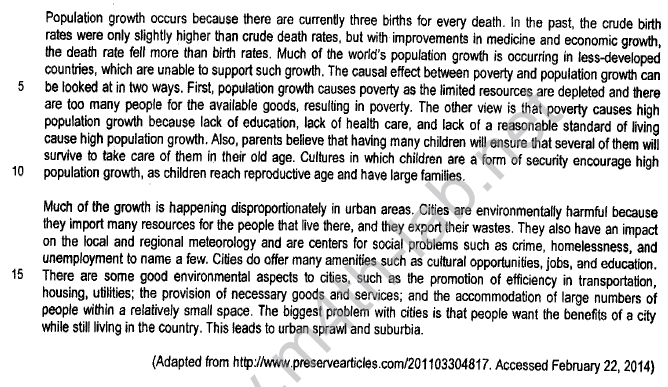
It can be inferred from the text that..
Pembahasan:
1
3.0

RUANGGURU HQ
Jl. Dr. Saharjo No.161, Manggarai Selatan, Tebet, Kota Jakarta Selatan, Daerah Khusus Ibukota Jakarta 12860
Coba GRATIS Aplikasi Roboguru

Coba GRATIS Aplikasi Ruangguru


Produk Ruangguru
Bantuan & Panduan
Hubungi Kami


Ikuti Kami


©2026 Ruangguru. All Rights Reserved PT. Ruang Raya Indonesia