
UTBK/SNBT Bahasa Inggris: Pertanyaan, Jawaban, Latihan Soal & Pembahasan
Urutkan
Anthony B
04 Januari 2022 13:39

1

Binar S
04 Januari 2022 10:50
2
Lili R
04 Januari 2022 10:50
1
Lala S
04 Januari 2022 10:50
3
Binar K
04 Januari 2022 10:50
1
Binar S
04 Januari 2022 10:50
1
Lili R
04 Januari 2022 10:50
1
Lala S
04 Januari 2022 10:50
2
Binar K
04 Januari 2022 10:50
2
Binar S
04 Januari 2022 10:50
1
Parents send their children to school with the best of intentions, believing that formal education is what kids need to become productive, happy adults. Many parents do have qualms about how well schools are performing, but the conventional wisdom is that these issues can be resolved with more money, better teachers, more challenging curricula, or more rigorous test. But what if the real problem is school itself? The unfortunate fact is that one of our most cherished institutions is, by its very nature, falling our children and our society.
Children are required to be in school, where their freedom is greatly restricted, far more than most adults would tolerate in their workspaces. In recent decades, we have been compelling them to spend ever more time in the kind of setting, and there is strong evidence that this is causing psychological damage to many of them. And as scientists have investigated how children naturally learn, they have realized that kids do so most deeply and fully, and with greatest enthusiasm, in conditions that are almost opposite to those of school.
Compulsory education has been a fixture of our culture now for several generations. President Obama and Secretary of Education Ame Duncan are so enamored of it that they want even longer school days and years. Most people assume that the basic design of today's schools emerged from scientific evidence about how children learn. But nothing could be further from the truth.
Schools as we know them today are a product of history, not of research. The blueprint for them was developed during the Protestant Reformatioin, when schools were created to teach children to read the Bible, to believe Scripture without questioning it, and to obey authority figures without questioning them. When schools where taken over by the state, made compulsory, and directed toward secular ends, the basic sstructure and methods of teaching remained unchanged. Subsequents attempts at reform have failed because they have not altered basic blueprint. The top down, teach-and-test method, in which learning is motivated by a system of rewards and punishments rather than by curiosity or by any real desire to know, is well designed for indoctrination and obedience training but not much else. It is no wonder that many of the world's greatest entrepreneurs and innovators either left school early (like Thomas Edison) or said they hated school and learned despite it, not because of it (like Albert Einstein).
What is the purpose of the text?
Pembahasan:
1
0.0
Non-verbal communication is defined as communication between people by means other than speech. Non-verbal communication (NVC) derives from the following major sources: (1) eye contact (amount of looking at another person's body and face); (2) mouth (especially smiling or grimacing in relation to eye contact); (3) posture (for example, sitting forwards or backwards); (4) gesture (as with the use of ann movements when talking); (5) orientation (of the body to the addresse); (6) body distance (as when we stand too close or too far away from others); (7) smell (including pigmentation, blushing and texture); (9) hair (including length, texture and style); (10) clothes (with particular reference to fashion).
Non-verbal communication is not quite the same as "body language" because any claim about a language must refer to an agreed and identifiable grammar and syntax. NVC is not always so precise or advanced; the vocabulary of non-verbal signs is more limited than speech. Even so, it is a mistake to consider NVC as isolated from speech. Instead, some complex interaction is envisaged between word and body signal, and one that is not always complementary. Imagine your self interviewing job applicants. You might not offer employment to a candidte who refuses to look at you, always, frowns, hunches both shoulders, sweats a lot, and has a Monican hair cut - despite the fact that he or she gives thoughtful and interesting replies to your question.
Take eye contact as an example for discussion. Mutual eye contact (where both people look into each other's eyes) can be a sign of liking, but prolonged gaze leads to discomfort. The directed eye contact vioilates a code of looking, where eye contact is frequently broken but returned to, and leads to depersonalization of the victim because an aggressor deliberately breaks the rules which the victim adheres to. Eye contact is often enhanced by size of pupils, eyebrow inflection and movement, and smiling.
According to the text, NVC...
Pembahasan:
2
0.0
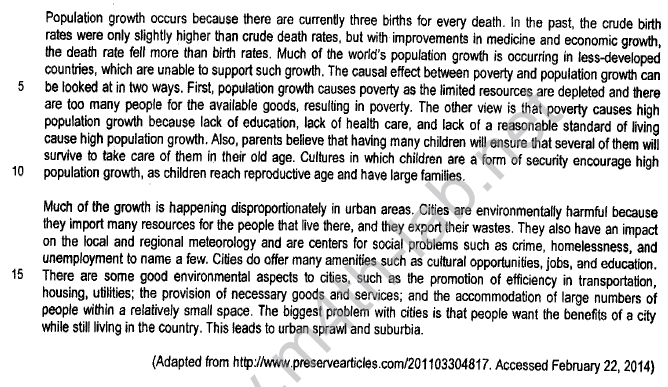
The writer organizes the ideas in the text by..
Pembahasan:
1
0.0
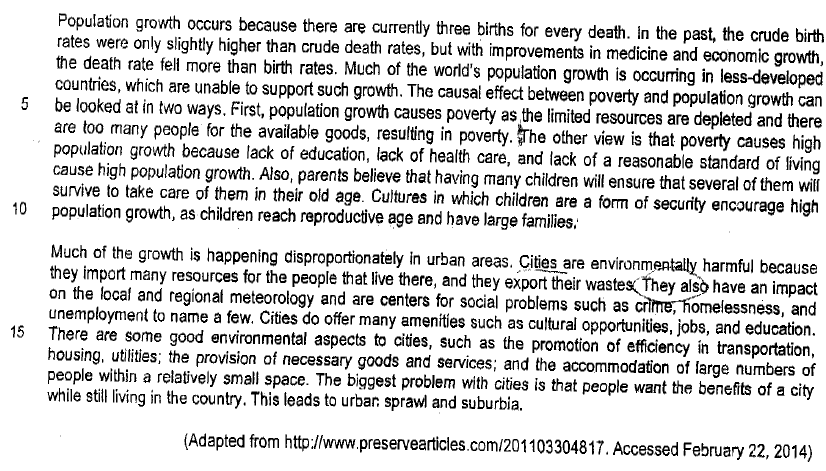
The pronoun "they" (line 12) refers to..
Pembahasan:
1
0.0
In which lines does the author assume people's expectation of village life wtih the city convenience?
Pembahasan:
2
0.0
The purpose of the text is to..
Pembahasan:
1
0.0
Which of the following is true according to the text?
Pembahasan:
1
0.0
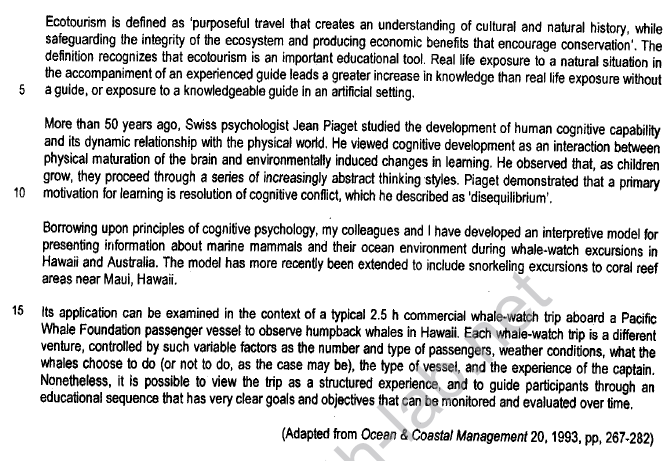
Paragraph 4 implies that..
Pembahasan:
1
0.0
What is the topic of the text?
Pembahasan:
1
0.0
Which of the following can best replace the word "venture: (line 17)?
Pembahasan:
4
0.0

RUANGGURU HQ
Jl. Dr. Saharjo No.161, Manggarai Selatan, Tebet, Kota Jakarta Selatan, Daerah Khusus Ibukota Jakarta 12860
Coba GRATIS Aplikasi Roboguru

Coba GRATIS Aplikasi Ruangguru


Produk Ruangguru
Bantuan & Panduan
Hubungi Kami


Ikuti Kami


©2026 Ruangguru. All Rights Reserved PT. Ruang Raya Indonesia