
SMA Bahasa Inggris: Pertanyaan, Jawaban, Latihan Soal & Pembahasan
Urutkan
Complete the text with correct words from the box.

Rapid Urbanization Increasing Pressure on Rural Water Supplies Globally
An international team of (1) ____ has carried.out the first systematic global (2) ____ of water reallocation from rural to urban regions the practice of transferring water from (3) ____ areas to cities to meet demand from growing urban populations. They found that 69 cities with a population of 383 million people receive approximately 16 billion cubic meters of reallocated ( 4) ____ per year.
The study, published in Environmental Research Letters, found North America and Asia are hotspots for rural-to-urban water reallocation, with the practice on the rise in Asia. Twenty-one cities rely on multiple water reallocation projects, such as Amman in Jordan and Hyderabad in India.
Since 1960 the global urban (5) ____ has quadrupled, driving demand and increasing competition between cities and agriculture for water. With 2.5 billion more urban dwellers expected by 2050, this trend is set to rise. Even in the UK-where water is considered (6) ____ concerns about water (7) ____ are prompting interest in water transfers, with Environment Agency Chief Sir James Bevan warning that England could run short of water in 25 years. Climate (8) ____ will further put (9) ____ on water resources and regional decision-making around water reallocation, as highlighted by drought crises in Cape Town, Melbourne and Sao Paolo over the past decade.
The researchers observed that cities often hold the economic and political sway in water deals. When rural (10) ____ are not involved in the design, development and implementation of a reallocation project, reallocation can deepen inequality and foster resentment and resistance. The spectre of dusty and deserted agricultural towns looms large since the iconic project that reallocated water from Owens Valley farmers to Los Angeles, California in the early 20th century. Flashpoints of conflict have emerged from Melbourne to Monterrey.
"Our research indicates. that governance matters," said lead author Dr Dustin Garrick, associate professor in environmental management at the University of Oxford's Smith School of Enterprise and the Environment. "Cities 'and rural regions need forums to negotiate deals, assuage conflicts, mitigate impacts and share the benefits from these projects."
(Adopted from: https://www.sciencedaily.com/releases/2019/04/190411083816.htm (April 6, 2019))
(5) ....
Pembahasan:

2
0.0
Complete the text with correct words from the box.
Rapid Urbanization Increasing Pressure on Rural Water Supplies Globally
An international team of (1) ____ has carried.out the first systematic global (2) ____ of water reallocation from rural to urban regions the practice of transferring water from (3) ____ areas to cities to meet demand from growing urban populations. They found that 69 cities with a population of 383 million people receive approximately 16 billion cubic meters of reallocated ( 4) ____ per year.
The study, published in Environmental Research Letters, found North America and Asia are hotspots for rural-to-urban water reallocation, with the practice on the rise in Asia. Twenty-one cities rely on multiple water reallocation projects, such as Amman in Jordan and Hyderabad in India.
Since 1960 the global urban (5) ____ has quadrupled, driving demand and increasing competition between cities and agriculture for water. With 2.5 billion more urban dwellers expected by 2050, this trend is set to rise. Even in the UK-where water is considered (6) ____ concerns about water (7) ____ are prompting interest in water transfers, with Environment Agency Chief Sir James Bevan warning that England could run short of water in 25 years. Climate (8) ____ will further put (9) ____ on water resources and regional decision-making around water reallocation, as highlighted by drought crises in Cape Town, Melbourne and Sao Paolo over the past decade.
The researchers observed that cities often hold the economic and political sway in water deals. When rural (10) ____ are not involved in the design, development and implementation of a reallocation project, reallocation can deepen inequality and foster resentment and resistance. The spectre of dusty and deserted agricultural towns looms large since the iconic project that reallocated water from Owens Valley farmers to Los Angeles, California in the early 20th century. Flashpoints of conflict have emerged from Melbourne to Monterrey.
"Our research indicates. that governance matters," said lead author Dr Dustin Garrick, associate professor in environmental management at the University of Oxford's Smith School of Enterprise and the Environment. "Cities 'and rural regions need forums to negotiate deals, assuage conflicts, mitigate impacts and share the benefits from these projects."
(Adopted from: https://www.sciencedaily.com/releases/2019/04/190411083816.htm (April 6, 2019))
(6) ....
Pembahasan:
21
0.0
Complete the text with correct words from the box.
Rapid Urbanization Increasing Pressure on Rural Water Supplies Globally
An international team of (1) ____ has carried.out the first systematic global (2) ____ of water reallocation from rural to urban regions the practice of transferring water from (3) ____ areas to cities to meet demand from growing urban populations. They found that 69 cities with a population of 383 million people receive approximately 16 billion cubic meters of reallocated ( 4) ____ per year.
The study, published in Environmental Research Letters, found North America and Asia are hotspots for rural-to-urban water reallocation, with the practice on the rise in Asia. Twenty-one cities rely on multiple water reallocation projects, such as Amman in Jordan and Hyderabad in India.
Since 1960 the global urban (5) ____ has quadrupled, driving demand and increasing competition between cities and agriculture for water. With 2.5 billion more urban dwellers expected by 2050, this trend is set to rise. Even in the UK-where water is considered (6) ____ concerns about water (7) ____ are prompting interest in water transfers, with Environment Agency Chief Sir James Bevan warning that England could run short of water in 25 years. Climate (8) ____ will further put (9) ____ on water resources and regional decision-making around water reallocation, as highlighted by drought crises in Cape Town, Melbourne and Sao Paolo over the past decade.
The researchers observed that cities often hold the economic and political sway in water deals. When rural (10) ____ are not involved in the design, development and implementation of a reallocation project, reallocation can deepen inequality and foster resentment and resistance. The spectre of dusty and deserted agricultural towns looms large since the iconic project that reallocated water from Owens Valley farmers to Los Angeles, California in the early 20th century. Flashpoints of conflict have emerged from Melbourne to Monterrey.
"Our research indicates. that governance matters," said lead author Dr Dustin Garrick, associate professor in environmental management at the University of Oxford's Smith School of Enterprise and the Environment. "Cities 'and rural regions need forums to negotiate deals, assuage conflicts, mitigate impacts and share the benefits from these projects."
(Adopted from: https://www.sciencedaily.com/releases/2019/04/190411083816.htm (April 6, 2019))
(4) ....
Pembahasan:
1
0.0
Complete the following sentences using the words in the box. Remember to use the correct forms.
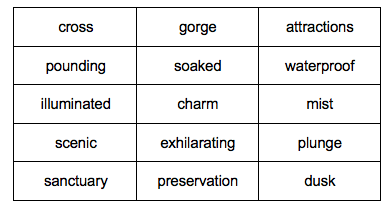
In the morning, the small town is covered in ____.
Pembahasan:
1
0.0
Complete the following story with the words in the box. Make any form changes if necessary. Look at the example.
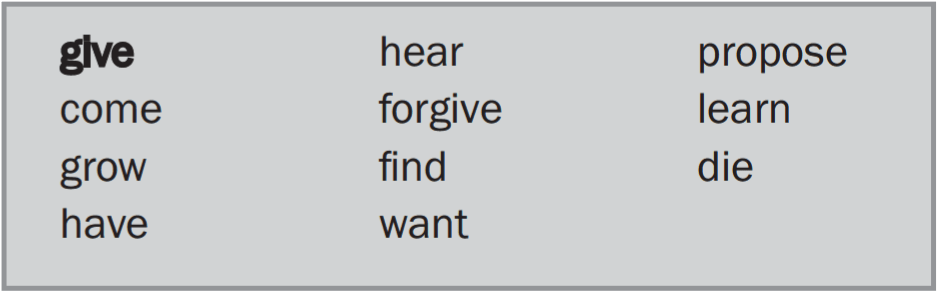
Calon Arang
Calon Arang was a widow of Girah who gave birth to a daughter in the jungle. Her daughter ____ up to be the famed beauty Ratna Menggali. Calon Arang ____ her daughter to marry a prince from Airlangga's palace. However, no prince ____ along. Infuriated by this, Calon Arang ____ the art of black magic and practised it against the kingdom, causing many people to die.
When the king Airlangga ____ of the epidemic in Girah, he consulted his high priest, Mpu Bharadah. The priest then sent his son to ____ Ratna Menggali. Calon Arang was pleased, the curse ended, and the couple wed.
Calon Arang inscribed her black magic secret on a lontar (palm leaf book). One day, her son-in-law ____ it and gave it to his father. When Calon Arang found out that Mpu Bharadah had learned her secrets, she was furious and declared war upon him. The priest ____ no choice but to fight and, in a deadly struggle, destroyed the widow by casting a spell. Before she ____, Calon Arang asked forgiveness. Mpu Bharadah ____ her and showed her the way to heaven.
Adapted from: http://www.bali-directory.com
Pembahasan:
1
0.0
Task 15
In pairs, match each word in column A with a word or phrase in column B that is close in meaning.
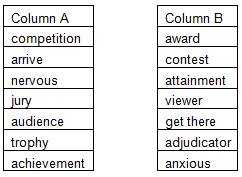
Pembahasan:
1
0.0
- participant (kb) : ....
- preparation (kb) : ....
- smoothly (kk) : ....
- trophy (kb) : ....
- useless (ks) : ....
Pembahasan:
1
5.0
- achievement (kb) : ....
- announcement (kb) : ....
- competition (kb) : ....
- costume (kb) : ....
- impatient (ks) : ....
- nervous (ks) : ...
Pembahasan:
3
0.0
Study and pronounce the following words. Then, arrange the jumbled paragraphs into a good text about Anita’s experience in attending her cousin’s wedding.
1. Paragraph ....
In the following morning, Ijab Ceremony (religious marriage consecration) was held. I sat right behind the bride. I really didn’t want to miss this moment because it is the most important phase in the wedding. After Ijab, there were some Javanese ceremonies following the wedding celebration. They were Panggih, Balangan Suruh, Wiji Dadi, Sindur Binayang, Timbang, Tanem, Tukar Kalpika, Kacar Kucur, Dahar Klimah, Sungkeman and Mertui Ceremony. I was too busy in the reception table so I did not follow all of those ceremonies.
2. Paragraph ....
The very first ceremony was Siraman (bathing ceremony). Siraman means to take a bath. The Siraman ceremony was organized in the afternoon. I was also involved in preparing the place and the stuffs needed. After the Siraman, the bride was led to the wedding room. She was dressed with a traditional woman’s blouse (kebaya) and batik clothes. Make-up was put on her by a traditional make-up woman who led the whole ceremony. The bride looked very beautiful.
3. Paragraph ....
I went back home in the evening by the last train. I went happily because I could attend my cousin’s wedding even helped the preparation.
4. Paragraph ....
Two weeks ago I went to Semarang to attend my cousin’s wedding. I was there for four days. I was involved in the preparation of the wedding ceremony. Like other Javanese wedding ceremonies, it has several complicated traditional rituals.
5. Paragraph ....
The next ceremony was Peningsetan or Srah Srahan (traditional engagement ceremony). The family of the would-be-bridegroom visited the parents and the family of the would-be-bride. They were bringing some gifts. After this ceremony, I helped the women in the backyard. We packed the snacks for the party in the morning.
6. Paragraph ....
The second ceremony was Midodareni (ceremony on the eve before the wedding). The bride had to stay in the room from 6 p.m. to midnight accompanied by some elder women giving her useful advice. My other cousins and I also visited her for a while.
7. Paragraph ....
After the wedding rituals, the reception followed. The newly wed couple received blessings and greetings from the guests. The newly wed couple looked very happy although they couldn’t hide their tired faces.
Pembahasan:
1
0.0
Guiding questions for editing:
Does the writer use indentation? What should she do?
Pembahasan:
1
0.0

RUANGGURU HQ
Jl. Dr. Saharjo No.161, Manggarai Selatan, Tebet, Kota Jakarta Selatan, Daerah Khusus Ibukota Jakarta 12860
Coba GRATIS Aplikasi Roboguru

Coba GRATIS Aplikasi Ruangguru


Produk Ruangguru
Bantuan & Panduan
Hubungi Kami


Ikuti Kami


©2026 Ruangguru. All Rights Reserved PT. Ruang Raya Indonesia